

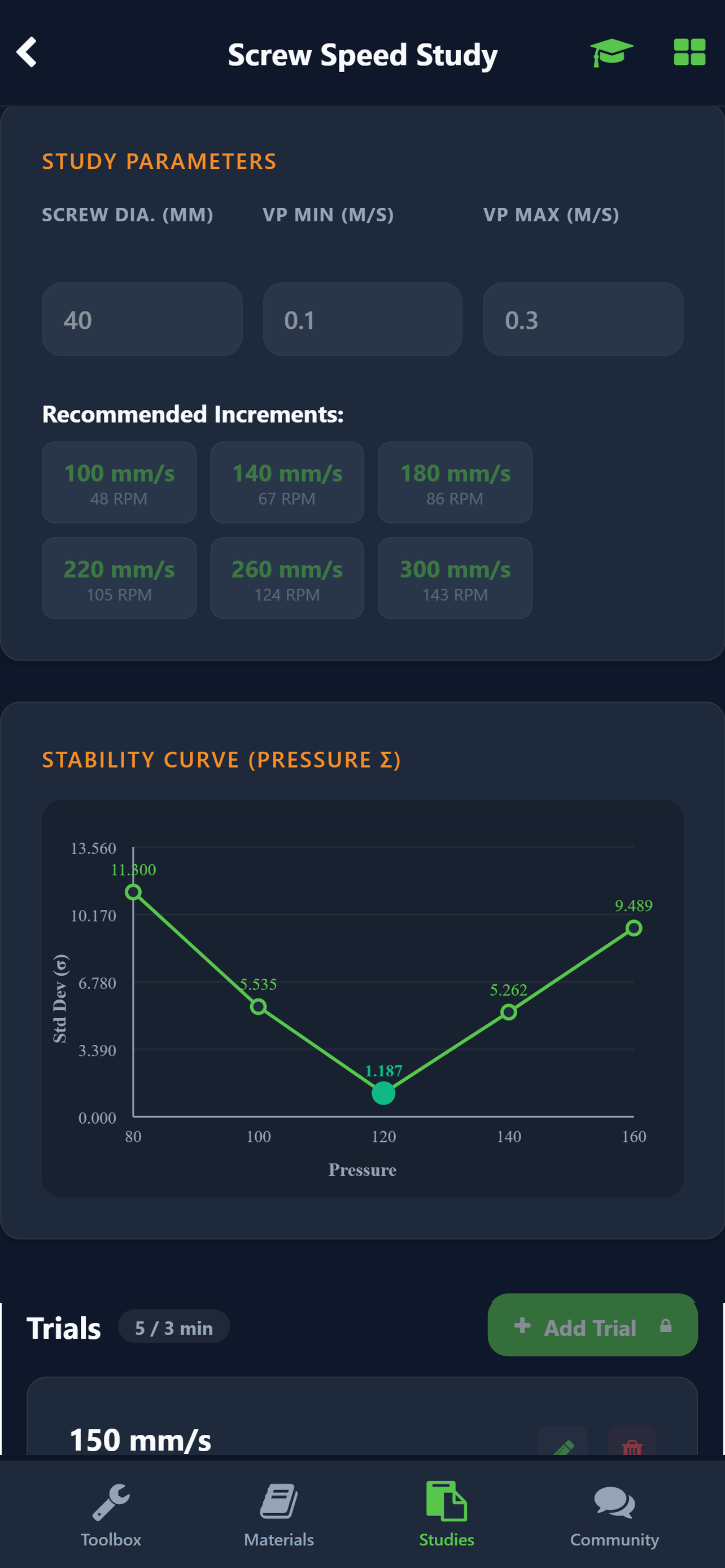
Scientific moulding studies on the press
Injection Moulding process knowledge
PolyTakt helps technicians, engineers, and managers capture, understand, and hand over moulding process knowledge — so good decisions can be repeated and avoidable production loss is reduced.
Available on Android today. App Store coming soon. No account required for core tools; works offline once installed.
Cloud sync, custom materials, and the scientific suite on your phone — billed via Google Play / App Store.
Explore Pro →Shared machine, material, and mould library for the site — from €12.50/seat/month, billed annually.
View Teams →Evidence-led articles from the moulding floor — written for technicians, engineers, and quality teams.
Visit the blog →Scientific moulding studies on the press
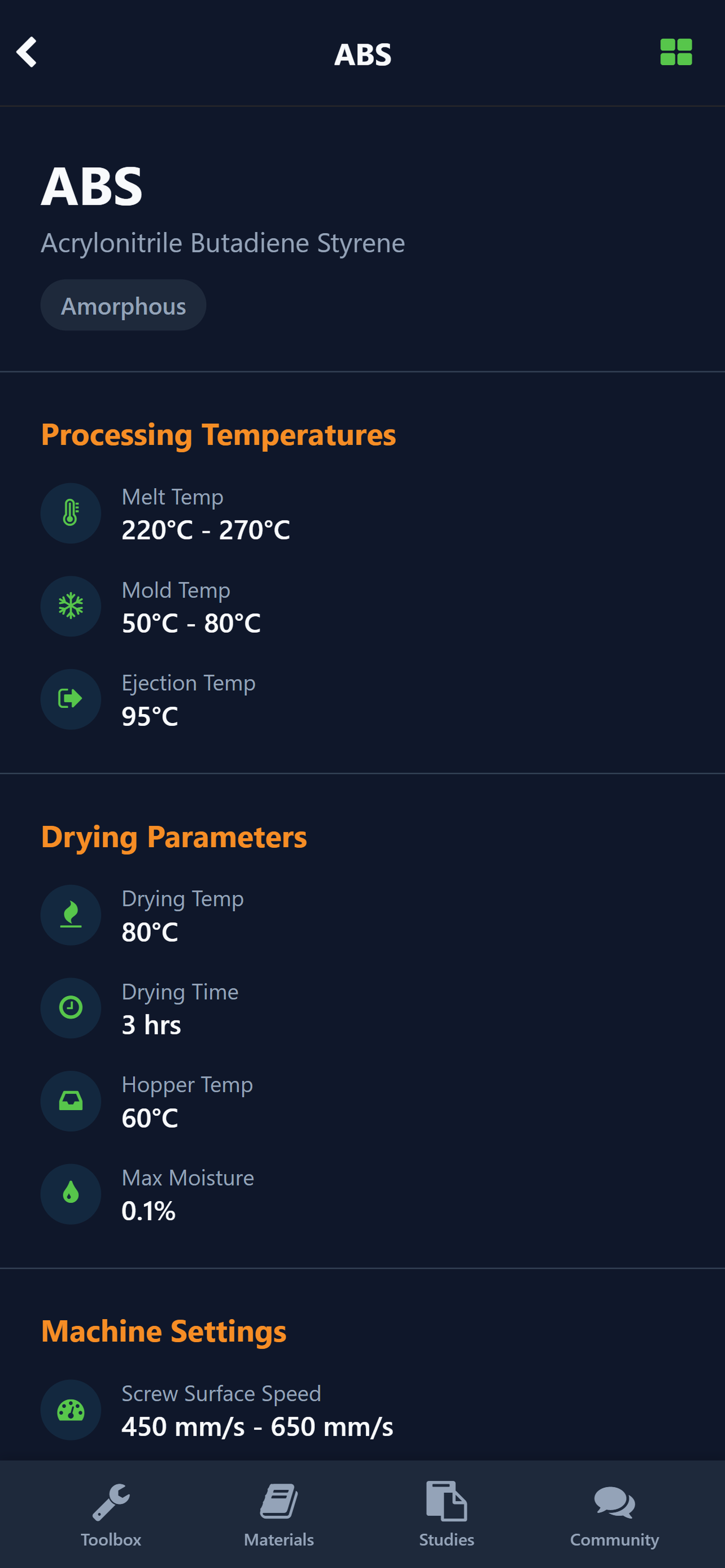
Structured setup and process development
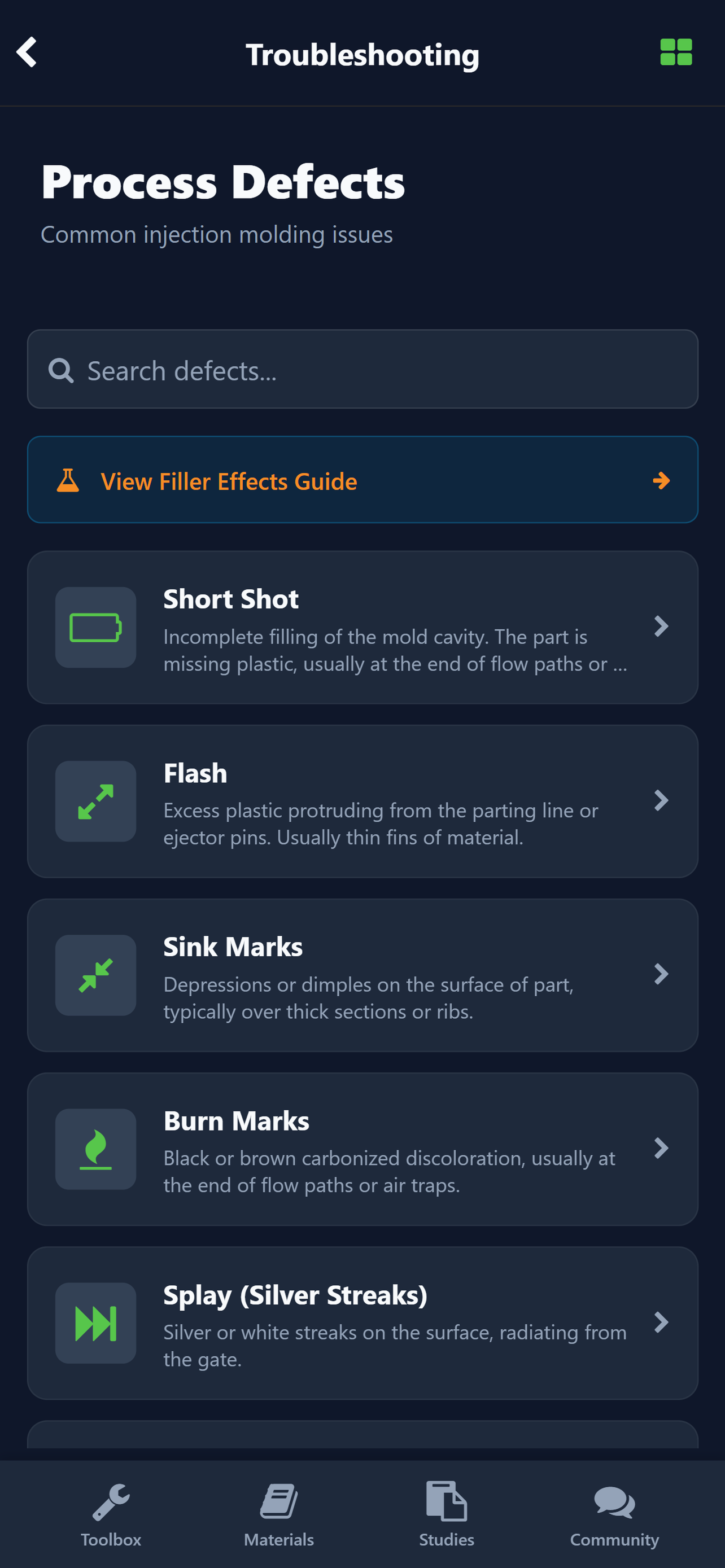
Troubleshooting with practical context
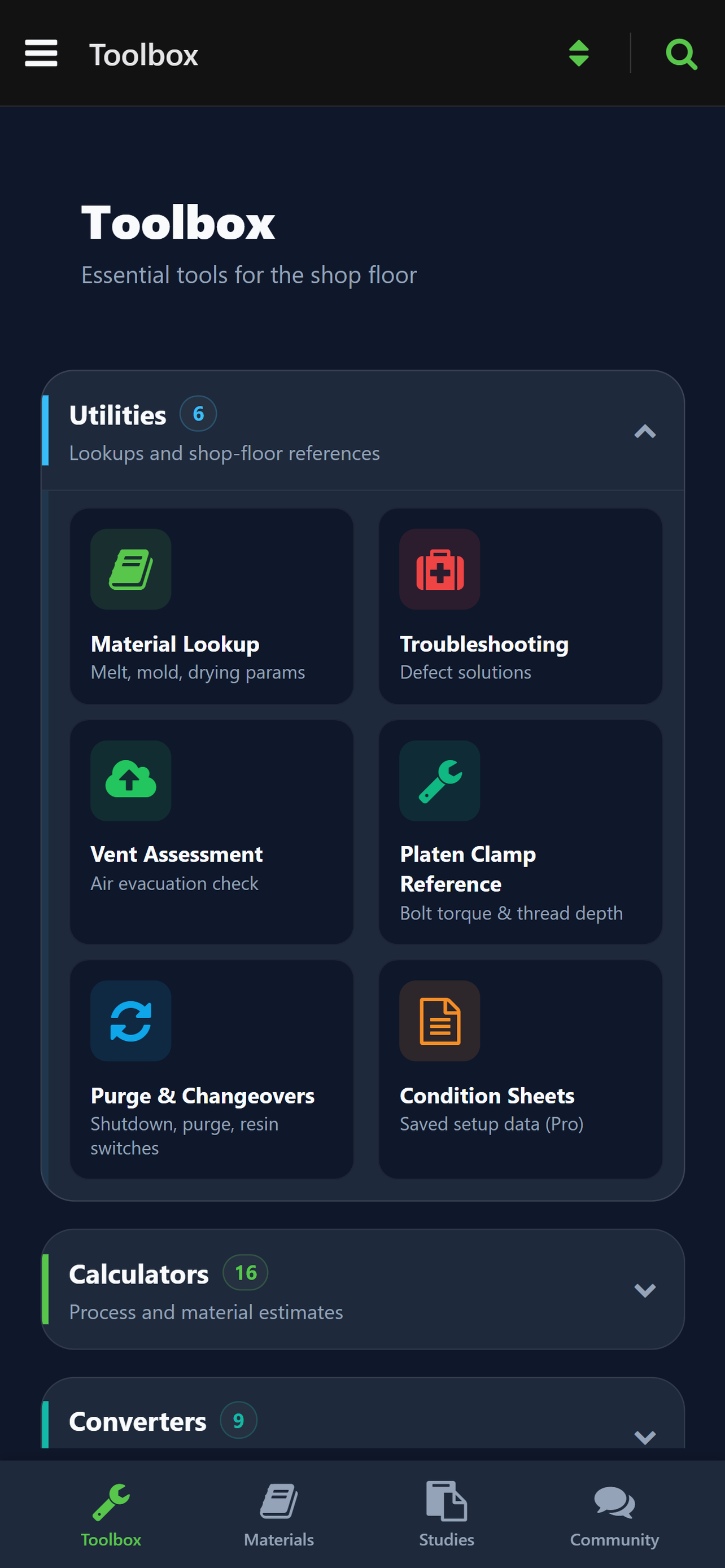
Shop-floor tools when you need them

Process records built for handover
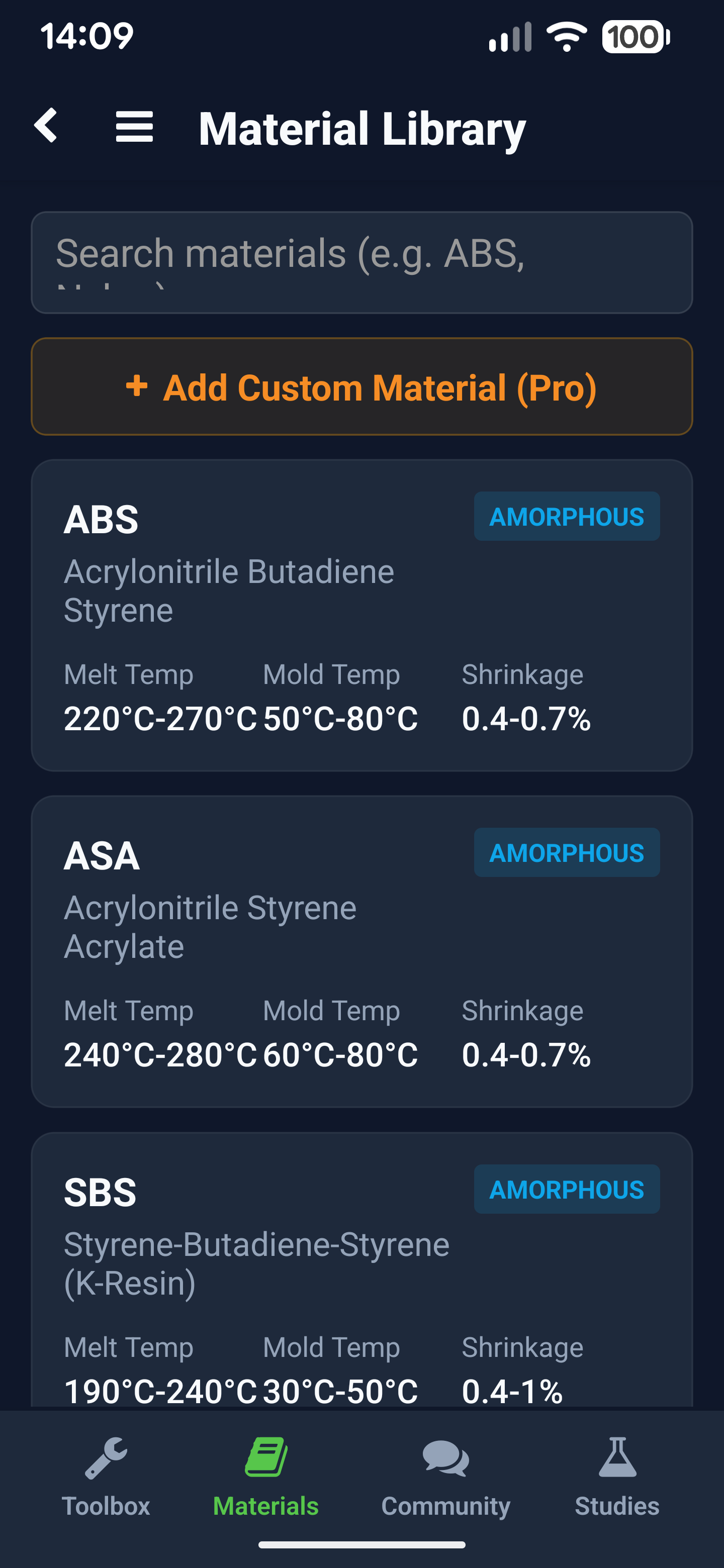
Designed for the factory floor
Team Pro
Managers buy seats once. Technicians and engineers join with a company invite and work from the same machines, materials, and moulds. Company-owned data, shift handoffs, and Stripe billing for the site.
Practical knowledge
The PolyTakt blog publishes practical process guidance and industry perspectives — written for technicians, engineers, and quality teams.
Industry insights
Decoupled moulding is often reduced to “fill to 95% and transfer.” The percentage is real training guidance — but schools interpret fill-only differently, and first stage is often a profile that must preserve the fill time from the speed study. This article explains why the methodology is misunderstood when it is treated as a recipe instead of a way of separating and understanding process variables.
Industry insights
Tooling issues are often treated as quality problems, but their real impact goes far deeper. Poor venting, worn parting lines, and cooling imbalance don’t just create defects—they destroy process stability and consume valuable machine time. This article explores how tooling shortcuts quietly erode capacity, repeatability, and scientific process control.
Industry insights
Scientific moulding is widely accepted in theory, yet many factories still rely on constant adjustments and reactive processing. Why? Because scientific moulding cannot succeed in an environment that refuses to eliminate instability at its source. This article explores why robust methodologies often fail in practice—not because the science is wrong, but because organisations expect processing to compensate for tooling, maintenance, and system weaknesses.
PolyTakt Desktop is being built for site-wide process documentation, validation programmes, and controlled records. We are looking for founding partners who want to help shape requirements and trial the system when it reaches the right level of readiness — not before.